Monday, February 18, 2013

Winter's Blue

Two weeks ago I took advantage of a 3-day-weekend and traveled to the Chubu and Kansai areas of Japan. It's one of my goals to see as many areas of Japan as possible, and this weekend I got to check two prefectures off my list: Mie Prefecture, the home of my lovely friend Stephanie, and Aichi Prefecture, the home prefecture of Japan's 4th-biggest city Nagoya.


The tunnel of light at Nabana No Sato, a winter illuminations display.


The grounds of the Outer Shrine, one of the two Ise shrines in Ise city. These shrines are the most important Shinto shrines in the world so I was excited to see them. It was really crowded that day though!


The Meoto Iwa or the "wedded rocks," supposed to represent husband and wife (or as I like to say: partner and partner.) This is one of the main tourist attractions of Mie Prefecture and the Shima peninsula. We were here at sunset and it was absolutely gorgeous and tranquil. Coastlines and the sea, I have missed you so much.


In front of Nagoya castle in Nagoya. It's inside a big park across from City Hall. It's always super interesting to go to castles because they provide so much information on Japanese history. As Americans we have only about 300 years of history to learn about and conceptualize, but Japanese history goes back well over 10,000 years, so it's sort of mind-blowing to think about just how OLD this country is and how much so many aspects of Japanese life are quite rooted in ancient tradition.


---------


So, lately I've been experiencing uncharacteristic low energy.
This is normal for me in winter: my energy level lowers in winter every year. But this year, it's stronger than ever before. I still function fine at work, and I still have the energy to do things on weekends (as you can see from the above photos), but I have no desire to do anything else on weeknights other than come home, eat, and sit in bed all night. I never want to wake up, and I feel tired and/or hungry at frequent intervals throughout every day. It seems that no matter how much I eat or sleep, I can't get myself to feel the life-loving energy I felt so easily before. I am just going through the motions, but I'm not engaged, motivated, inspired. I don't feel negative at all (not sad or depressed) but just...lazy and tired. So why do I feel this way? Work isn't exhausting, so I know that's not the culprit.

A couple reasons I've thought of are:
I'm not exercising.
The cold here is colder than anything I have ever experienced and I am not used to it.
I miss my fulfilling social network of friends and family from back home.
I don't feel connected to my community here.
I am stressed about money.
I have very few outlets for artistic expression (no choir to sing in, no piano to play, no club to dance in, no place to perform.)
My voice is still weak and nodule-y and as such I can still barely sing (although it's much better than before.)

I know that as the weather warms up, I will naturally feel better. But my goal is to find a way to remedy my situation and my attitude using these reasons as a starting-off point. Whatever I can change, I will. And whatever I can't change, I won't worry about. I really want to dig in and feel engaged and inspired every day here!


---------


And now, to bring back a relic from the past:


*JAPANESE CULTURAL TIDBIT*


In my entries from Nagasaki, I frequently mentioned little interesting aspects I found about Japanese society. This time around, I feel like I can offer deeper social commentary than I could before. I'm going to try and move beyond the age of "they don't have public trash cans" and onto deeper insights that convey a more thorough understanding of Japanese culture, without generalization or stereotyping.


Thank-yous and Apologies
Thank-yous and apologies are thrown around like crazy here. There are many many ways to say either. This is an aspect of Japanese society which I fit into perfectly. Part of my personality is very eager-to-please and craves validation, so when I apologize, it makes me feel good to hear the "it's okay" from the other party. Japanese society highly values extreme apologetic-ness and gratefulness. When you receive a present, you say "sumimasen." When you accidentally bump someone on the train, you say "sumimasen." When you want to get someone's attention, you also say "sumimasen." In this way, "sumimasen" is an all-in-one combination of "thank you," "excuse me," and "I'm sorry." The three words (and intentions behind them) kind of blur together, because it is assumed that if a person is grateful, they will also feel guilt at making the other party do such a thing for them, and thus an apology is expected. Living in this world of politeness and gratitude is just another way in which all social actions are smoothed over, and conflict is avoided at all costs. A patron and an employee at a restaurant can respectfully argue over a bill just using these magic words of "I'm sorry" and "thank you" and acting appreciative and polite. They will not let their emotions show from underneath the veneer of their social politeness. (But that's a story for a different day.)

Japanese society also values extreme humility to the point of self-deprecation (of the self and of the family), which is something western culture criticizes but taken in the Japanese context, is not nearly as bad as you'd think. (It's not what you really think, it's just what to say to others to act humble.)


Sunday, February 3, 2013

6 Months

As of January 30th, I've been in Japan for 6 months! It still feels like I just got here. Time seriously flew by. If I were only staying one year, I'd be officially half done with my entire Japan experience. But fortunately, I'm re-contracting, so I still have another year and a half to go.


Whenever anyone asks me how I'm doing here, I tell them that work is definitely the most enjoyable part of my life here. It's true, and I couldn't be more thankful for that. I am so blessed to have been assigned to a school with only 52 students, and an elementary school with only 65. I know all of my students' names, and I love each and every one of them. I have good relationships with my co-workers, and the support and respect of both my principals. Work is challenging enough to keep me motivated, but not so challenging that I burn out. I may have slightly higher-than-average expenses for an ALT (mostly owing to the fact that I use a car), but with such a positive work situation, how can I complain? It's nice to wake up in the morning and not feel stress, fear or dread over my day. I have a lot of ideas that I'd like to try with students, but I'm planning on starting a lot of them in April, when the school year changes.


I won't lie: winter sucks. But, winter sucks wherever I am, and plenty of places are much colder than Shibukawa. I daresay I'm actually used to the cold now, compared to the shock of a couple months prior. We had our first "big" snow about two weeks ago, and we're due for another one in a few days. But unlike the grisly white mountainous locales just an hour north of my town, our snow doesn't fall often enough to consistently accumulate, and we usually experience days or weeks of snow-free weather in between snows. The hallways of my school are cold, but the teacher's room and classrooms are warm, and I'm usually pleasantly surprised to find that I am warm enough in my own home that I don't need to run the heater (as long as I'm wearing all my cozy layers of sweats.)


The biggest change between summer-me and winter-me is that I just don't do as much now. I am perfectly happy to come home from school at 5:00, start to make dinner and use the computer, and continue to do so until I fall asleep, every weeknight. Hibernation mode kicks in and I don't want to take walks, go out to eat, or even do anything on weekends sometimes. Even walking to Japanese class in the cold, a 20-25 minute walk, takes all the effort I can muster.

On that note, my Japanese is making strides. I could be studying more, but I'm still proud of the weekly progress I'm making.

My biggest stressor as of late is making decisions regarding how to spend my money--specifically, to travel or not to travel. I know in my heart that I should travel as much as possible, and that once I'm not living in Asia, I'll never get this opportunity again, but I second guess myself--"Is it worth it?" "Shouldn't I put money in savings for an emergency?" The me of a couple years prior would have definitely been 100% pro-travel. But when I'm actually in this situation, all the stress it causes pops up--booking flights and hostels, securing visas, finding travel buddies, being wary of being duped, etc. etc. The clock is ticking, and spring break flight prices are only getting higher. I'm also still conflicted on whether to visit home this summer or wait until the winter holidays next year. I only have so much money to go around, and I'd like to save up in case I have car problems, or need dental work, or for any other of the myriad things that could happen. So hopefully this time in my life will be a growing experience for me where I learn what I value, how to prioritize, and how to spend money in the most "worth it" way I can.


Picture time! (Click on the pictures to see them bigger)

In January, my friend Emily had her birthday celebration at Tokyo Disneyland. I jumped on the chance to visit Japan's version of my favorite place in the world! Having had an annual pass in California for 3 years, and being a Disney-lover since childhood, Disney (despite its flaws) holds a very very special place for me.


Friends at the entrance: Sam, Emily, Lisa, Dorothy, and me. Three Canadians, an Oregonian, and a Californian!


I was surprised that the Main Street shopping area is covered underneath an arcade-style glass lattice. This is because in comparison with California Disneyland, it rains (and snows!) a lot more here!


The line-up to It's A Small World: also covered! The chorus of It's A Small World in Japanese repeats "世界が一つ" ("there is one world.") Close enough.


Absolutely dying on the teacups. I've always hated this ride. I don't know why I thought this time would be any different.


Ending the night with a crazy photoshoot in ToonTown.


Sunday, January 6, 2013

Winter Vacation

In the past two weeks I visited 7 new prefectures, rode on over 2000 km of railroad tracks, visited old friends and made new ones, and saw some of Japan's most stunning temples, monuments, natural features, and historic sights. I wanted to have a fun and enriching Winter Break without spending too much money, and I think that goal was accomplished. Here are some pictures from my journey.

Hokuriku Trip


Deep snow and mountain farmhouses at Shirakawa-go historic village, Gifu Prefecture.


Gokayama historic village, Toyama Prefecture.


Winter spirit at Kenroku-En garden, one of Japan's top 3 finest, Kanazawa City, Ishikawa Prefecture.


Kansai Trip


Nunobiki waterfall, Kobe City, Hyogo Prefecture


Kobe's Famous waterfront pier. Kobe City, Hyogo Prefecture


Chillin' with my deer friends in Nara. Deer roam wildly throughout the streets and get feed "deer crackers" by eager tourists. Nara City, Nara Prefecture


A beautiful doe. Nara City, Nara Prefecture


The daibutsu at Todaiji Temple in Nara. The biggest Buddha in all of Japan. To give you an idea of the scale, a human being could easily slide down through one of its nostrils. Nara City, Nara Prefecture


Uji, an unexpectedly beautiful town famous for its matcha green tea. Uji City, Kyoto Prefecture

The chillingly serene bamboo groves of Arashiyama. Kyoto City, Kyoto Prefecture


My first Japanese castle experience. Hikone Castle. Hikone City, Shiga Prefecture


From the top floor of the castle, a view of Lake Biwa and its foothills. Hikone City, Shiga Prefecture


New Years' Kanagawa Trip


On New Year's Eve, a visit to downtown Yokohama and its famous ferris wheel. Yokohama City, Kanagawa Prefecture


The first sunrise of 2013 at Enoshima Beach. Fujisawa City, Kanagawa Prefecture


The equally stunning views to the east of a sunrise-lit Mount Fuji. Fujisawa City, Kangawa Prefecture


Washing our money at the Zeniaraibenten shrine. Kamakura City, Kanagawa Prefecture


This time, I saw the 2nd-biggest Buddha in all of Japan: that of Kamakura. Kamakura City, Kanagawa Prefecture


The delicious New Year's feast, all hand-prepared by Nana's mother. Atsugi City, Kanagawa Prefecture


And what New Year's would be complete without dressing up in traditional Japanese formal wear. All my thanks go to my friend Nanami and her family for providing me with such an exceptional traditional Japanese New Year experience. Atsugi City, Kanagawa Prefecture


Now it's back to work tomorrow and onto the third trimester of the school year! Soon it will be March and my 3rd-years will be graduating and moving onto high school; the 6th graders will come up and join the junior high crowd, and a new school year will begin.

Wednesday, December 19, 2012

Holidays (again)

Well. Apologies for the delay in posting! I've been meaning to write a post since forever ago, but life happens and I keep pushing it aside. I feel like nothing super interesting is happening, even though every day is in and of itself more interesting, in some ways, than anything I've ever experienced before. I'm having one of the most unique experiences I've ever had or ever will have, but thinking about it like that makes me intimidated by its importance, so I try to just live life normally. Winter has made me haze over, but I'll attempt form coherent themes out of my ranging, fleeting, meandering thoughts.


Checking out Kusatsu, the most famous onsen resort in all of Japan, and a part of my prefecture.


I. Winter's Cold

There were about 3 weeks that were neither too hot nor too cold. Japan is both a very hot and very cold country. In August I could be naked in my room at 3 in the morning and still be warm; in December I can be wrapped in sweats and flannel blankets and 3 pairs of socks at noon on a sunny day and still be freezing. I'm what the Japanese call a samugari, which means my body is sensitive to cold. Coming from a mild Californian climate, my body's previous known notions of "cold," "colder," and "coldest" are far, far surpassed by the sensations of coldness I experience here. When I walk to Japanese class at night, even though I'm wearing at minimum 3 layers all over, a wool coat, a neck-warmer, gloves, and a hat, the cold is disorienting. I pull my neck-warmer over my mouth and nose to keep them from turning numb, but my exhalation of breath shoves upward and my glasses fog. At school my fellow teachers ask me how I'm adjusting to the Japanese winter, and I can't begin to convey to them how new this is to me. I'm not sure how much is nature and how much is nurture, but I think being raised in a colder climate really does acclimate one's body (or at least their mind) to the cold better.

The first snow was last week. Snow is still a novelty to me so it's exciting despite the hassle and the cold. 危ない!They tell me at the BoE and at school. 気をつけて!Be careful! Don't drive over slippery snow and ice!

My body, and my mind, feel a shift; they're in a different place in winter. But I felt that way every year in California too. I have less physical energy, I want to be outdoors less, I want to do less and sleep more. Am I a bear or other type of hibernating creature?

And it's still autumn. Winter officially starts on December 21st. Three more months to go! Until then, I may be outside as little as possible.


Jumping for joy at a foliage-covered road on the way to Oze National Park. Although it was a great day, it was also an almost completely silent day. My incredibly kind friends humored me by playing charades, lip-reading, and reading my iPhone notes from me all day long.


II. Vocal Nodules

So for those of you not in the know, I was (re-)diagnosed with vocal nodules in mid-October. To try and make a long story I've explained many times short, vocal nodules are like tiny blisters or calcifications which appear bilaterally on one's vocal folds. They arise from various forms of vocal overuse or misuse. Singers and teachers are prone to them (of which I am both, hey!) because they are professional voice users. The reasons for forming nodules are multifaceted, but I think in my case, they arose due to a combination of certain environmental factors and the loud, clear, over-enunciated style of teaching I was performing all day at school. When you phonate, your vocal folds strike each other/vibrate (which produces the sound), and just like your palm can get a blister from using the monkey bars one too many times, so can your vocal folds develop inflammation from overuse, which can harden into a tough blister and--ta-da--vocal nodules. Your vocal folds are supposed to be flush with one another, but when nodules form, they can't close completely, sending air through the vocal folds. This makes your voice weaker and dries it out.

So, I went on vocal rest. I took a week off work, and I didn't talk at all for 9 days. For many more weeks after that, I only talked as needed during my 3 or 4 classes per day at school, and remained more or less silent otherwise. I have made necessary changes to ensure that all environmental factors are eliminated--I get enough sleep every night, I am well-hydrated, I eat anti-inflammatory and throat-soothing foods, I use a humidifier, I stretch my neck and shoulders throughout the day. Most importantly, I have been going to speech therapy for a few weeks now (over Skype--yay for the internet!) I have been learning reasons why I may have been damaging my voice as I was teaching and singing, and learning appropriate vocal techniques and exercises for ensuring proper placement and use of the speaking voice. For people in professions who use their voice all day long, it's very important to understand proper voice use. Especially for me since I want to be a singing teacher, and singing requires much more vocal control and subtlety than speaking, having a healthy and strong voice is essential for my livelihood for the rest of my life.

A few weeks were really bad. I cried on more than a few occasions. Why did this have to happen to me? And here? How will I maintain relationships here? How will I do my job? Not being able to use your voice has huge psychological effects, especially for an extrovert like me. I wondered if I would have to go home. I wondered if I would have to have surgery (like Adele's, which was a success, and like Julie Andrews', which was a failure.) But slowly, and seemingly from nothing, my voice gradually started getting stronger. I could talk for longer and longer periods without feeling tired. I could speak longer sentences without needing to drink water to quench my throat. And though I still have a long way to go, especially in regards to singing, I feel I've made some good strides so far. I am able to do my job fully, which is the most important thing.

And as much as I like feeling sorry for myself, I had to admit to myself that it's rather good, opportune even, that this happen to me HERE rather than back in the states. Why you ask? There are a few reasons. One is that I have less responsibility and fewer teaching demands here. Just 7 months ago, I was student-teaching every day from 8:00 to 12:20. That's 4 hours, with just two 10-minute breaks. No co-teacher, just me and the kids. Then, I would go teach 3 or 4 private voice lessons or ESL lessons, or have a 3-hour discussion class, then I might go to a choir rehearsal, and then go home to my four roommates and my shared room. That's a lot of vocal demand, both talking and singing, every day. Here, I am at work from 8:00-4:00, but I only teach 3 or 4 classes per day. That's at maximum, 4 hours of teaching, in which I co-teach with a Japanese English teacher or homeroom teacher, and share talking responsibilities. Then, while the other Japanese teachers chatter on in Japanese in the teacher's room, I get to play my gaijin (foreigner) card and remain silent. I use the computer, I plan lessons, I study Japanese, but I don't talk much. Then, I get to go home to my studio apartment where I live alone and remain silent for the rest of the evening. I also don't have any singing demands of me here. It's the first time in my life since I was 12 years old that I haven't been a member of a choir or teaching a choir. So I didn't have to quit anything, or cancel anything--I could just live my normal life here, without talking much. Although it saddens me to not use my voice too much when I DO go out to social events, the fact that my daily life doesn't require strenuous talking or singing is very crucial to my vocal survival right now. So it's heartening for me to realize and remember that.

I have more to say about my work life but I will save it for a future post, for this has lengthened far more than I thought it would.


Thanksgiving dinner in Japan, made especially for ALTs at the Prefectural Office's own café.


I recently braved the below-freezing temperatures outside, at the top of a mountain, at night. I took in the illuminations spectacular at the top of Gunma's Mt. Haruna and her caldera lake, Lake Haruna.


Tuesday, October 30, 2012

Holidays

Since fall's approach I've started to think a lot about American seasonal and holiday traditions and their contrast with Japan's.

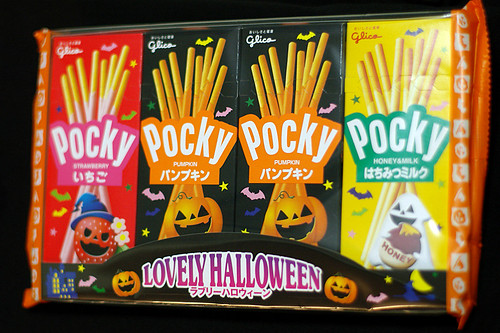
I've lived abroad twice before, in France and Nagasaki, but both were during the summer, only one season long. This is my first autumn and winter away from the U.S. of A. As I experience autumn here, I realize that it takes being separated from your home culture to be able to see it with a more objective eye. Only by being apart from something can you realize what you take for granted. Japan observes the Western holidays of Halloween and Christmas, but because these holidays lack history here, the extent and type of celebration can be very different. For example, this is the Halloween I love from the states:


And this is Halloween in Japan:


As cute as it is, that's not the Halloween I know. The cultural tradition and meaning behind the holiday isn't there. Yes, Halloween is now essentially a for-fun holiday in the states, but because we've been celebrating it for hundreds of years, it has manifested itself in deep ways in our culture. In Japan it's just another vacuous Western import.

Christmas is worse. Christmas isn't about family...it's a date night! Come December, I will feel the pangs of longing for singing winter choral music, decorating the Christmas tree with mama, lights on the trees everywhere, and exchanging gifts and cards with friends. It's such a big part of me, I can almost tear up just thinking about it.

But, experiencing all this nostalgia and yearning for the culture I know and love makes me happy, because it makes me realize that pride and warmth actually exist in me. I could spend forever bashing my country's policies, government, educational system, etc, but of course there is a part of me that feels at home being American and doing these American things. Oh wait...I actually like Halloween and look forward to it! I hadn't realized. This so-called "Western tradition" is my home, my comfort zone, as it is for all who grew up with it. By being apart from my comfort zone, I can better conceptualize that where one grows up determines their center vs. periphery, their comfort zone vs. unknown.

When I go to a matsuri, or when I read about the traditions of Sho-gatsu or Setsubun, I try to understand the the associations that Japanese people have with their holidays. Japan has a literal wealth of holidays and traditions which are much, much older than anything ever made in America. I'm very excited to experience them.

I am in Japan. I want to observe Japanese cultural tradition for what it is, and not get caught up in what I'm missing out on back home....but it makes me happy to realize that I do miss it. :)

Sunday, October 21, 2012

Phase Two


The stages of culture shock.

(Which, by the way, is a misnomer: we don't feel "shock" in the sense that we're surprised or baffled; "Cultural Fatigue" or "Cultural Adjustment" are better names.)

Obviously the chart is simple and depends on so many other factors, but no matter what, there are bound to be those occasional moments where you feel discontentment or hostility for your host culture. In the JET world, we call it "stage-twoing." After having ridden the honeymoon wave of culture explosion, you settle in to a second stage in which you're more prone to homesickness or frustration. In our schedule, this just happens to coincide with the onset of colder weather, which for me means lethargy and laze.

My outlook hasn't changed, and neither have my circumstances per se. But the combination of approaching the 3-month mark, the arrival of the cold autumn winds, and the onset of unexpected health issues has lately given me less reason to celebrate and more reason to stew.

From afar, it must look like my life is simple and great. That's how others' lives looked to me when I saw their pictures of life in Japan. That's because pictures string together a simple story of a simple life. They're each a square on a patchwork quilt called My Life, but they're only the cover, the surface. My life feels so much more complicated than my collections of pictures can reveal.

But, it's all a reminder to me of the quote I have written on my wall. The agent of change is you. You guide your own life. You guide your actions and your attitudes. And it is your attitude which determines everything.

I'm very lucky that I have a workplace which supports me. I don't know where I'd be if it weren't for my kind 校長先生 (principal) and JTE (Japanese Teacher of English.) I'm very lucky I have a network of friends and acquaintances, those who can empathize with me and help me, throughout Gunma and beyond. I'm very lucky to BE HERE. NOW. Securely employed doing something I'm passionate about. Learning a culture and a language. Yes, I need other facets of my life in order for it to feel complete, but they're all second fiddle to those two things.

So I choose to be content.


Thursday, October 11, 2012

直島


Despite a froggy voice and perhaps The World's Worst Cold, Naoshima, Japan's Art Island, was a beautiful dream. I was blessed to experience this tranquil island of rich culture, beautiful art and even more beautiful weather.